Advancing Communities Australia continues to work towards addressing non-communicable disease risk across Australia.
Our mission is to continue to support non-profit organisations, to build sustainable, resilient communities.
Below are details of our impact through the various programs and partners we support:
Program 1: Regional Health Program (Health)
Overview:
Beneficiaries: ‘Adults – aged 25 to under 65′, People in rual/regional/remote communities’; ‘Financially disadvantaged people’, ‘People at risk of homelessness/people experiencing homelessness’, ‘People with chronic illness (including terminal illness)’, ‘Unemployed persons’, and ‘Environment’.
Program Results: West Moreton Obesity Advisory Group
- Hosting of white paper “Local government response to obesity in regional and rural Qld”.
- Published in 2024: Click here to read the white paper.
- Adopted by Ipswich City Council
- Developed partnerships supporting well being training to support the mental health of workers in the social services sector, supporting youth housing and homeless populations in the region.
- The organisations directly supported are Hannah’s House (https://hannahshouse.com.au/) and Ipswich Community Youth Service (https://www.icys.org.au/). These two organisations provide specialised support for children with complex health needs and a range of support options for Youth.



- Program 2: Community Education Program (Adult Education)
Overview:
Beneficiaries: ‘Adults – aged 25 to under 65’, ‘Families’, ‘People from a culturally and linguistically diverse background’, People in rural/regional/remote communities’, ‘Financially disadvantaged people’, ‘People at risk of homelessness/people experiencing homelessness’, ‘People with chronic illness (Including terminal illness), ‘Unemployed persons’.
Program Results: Climate Action School
Advancing Communities’ mandate for health promotion and disease prevention connects powerfully to the CAS program. At the heart of our work is a simple but profound insight: when people feel valued, purposeful, and engaged, the brain releases dopamine, a critical neurochemical underpinning mental wellness and a key factor in the prevention of conditions such as Alzheimer’s, Parkinson’s, and dementia. CAS embeds this principle through its partnership with Neuro and its use of LEAN methodology, which places respect for people at its core. By creating meaningful, skills-based roles for students, teachers, and cleaning staff within a real working sustainability environment, CAS actively contributes to the mental wellbeing of participants and the broader community. Students in schools also experiencing Climate anxiety are able to utilise the SSC to use their hands to feel better. This makes the CAS program not just an environmental initiative, but a genuine health promotion and prevention program, directly aligned with Advancing Communities’ mission.
Program Results: Climate Action Nurses
- Development of an online resource portal for both heathcare professionals and the community in conjunction with Climate Action Nurses to address the non-communicable health impacts of climate related weather events.
- Climate Action Nurses works with the nursing profession to address the impacts of climate changes on those most vulnerable in the community, including developing patient education resources such as a Bushfire evacuation planning checklist which has been distributed throughout the community.
- More information click here.
Program Results: Supporting Teacher Wellbeing thorough practical action
- The CRACR Blueprint supports teacher wellbeing and mental health by providing educators with a practical, easy-to-apply framework that reduces the stress, anxiety, and emotional burden often associated with managing challenging classroom behaviours.
- Behaviour-related pressures are a significant contributor to teacher burnout, mental fatigue, workplace stress, and declining workforce retention. The CRACR model (Caring, Rapport, Applying Boundaries, Consequences, and Reflection) equips teachers with evidence-informed strategies to build positive relationships, respond confidently to behavioural challenges, and create calmer, more predictable learning environments.
- By reducing uncertainty and increasing teachers’ sense of control, confidence, and professional efficacy, the framework helps minimise the emotional strain that can negatively impact mental health.
- The accompanying reflective journal further encourages self-awareness, professional reflection, and proactive wellbeing practices, supporting teachers to develop resilience and sustainable habits that protect their mental health while enhancing outcomes for students. Ultimately, healthier, more confident teachers are better positioned to foster positive, supportive learning environments that benefit entire school communities.

Program Results: Climate Action Schools
- The climate action Schools program underpin’s mental wellness by creating meaningful, skills-based roles for students, teachers, and cleaning staff within live sustainability environments.
Why Advancing Communities and Climate Action Schools are a natural fit
Advancing Communities’ mandate for health promotion and disease prevention connects powerfully to the CAS program. At the heart of our work is a simple but profound insight: when people feel valued, purposeful, and engaged, the brain releases dopamine, a critical neurochemical underpinning mental wellness and a key factor in the prevention of conditions such as Alzheimer’s, Parkinson’s, and dementia. CAS embeds this principle through its partnership with Neuro and its use of LEAN methodology, which places respect for people at its core. By creating meaningful, skills-based roles for students, teachers, and cleaning staff within a real working sustainability environment, CAS actively contributes to the mental wellbeing of participants and the broader community. Students in schools also experiencing Climate anxiety are able to utilise the SSC to use their hands to feel better. This makes the CAS program not just an environmental initiative, but a genuine health promotion and prevention program, directly aligned with Advancing Communities’ mission.

Overview:
Beneficiaries: ‘Adults – aged 25 to under 65’, ‘Families’, ‘People from a culturally and linguistically diverse background’, People in rural/regional/remote communities’, ‘Financially disadvantaged people’, ‘People at risk of homelessness/people experiencing homelessness’, ‘People with chronic illness (Including terminal illness), ‘People with disabilities’, ‘Unemployed persons’, ‘General community in Australia’.
Program Results: Volunteer Development Investment
- We continue to invest in increasing our pool of volunteers and have been working on refining our organisational structure etc, in keeping with recommendations of Volunteering Australia. In general, our volunteers work behind the scenes with our partners, who actively address issues relating to matters such as public awareness of non-communicable diseases, climate change impact, as well as matters relating to obesity in the community. We do however, respond to any local non-profit organisations that approach us for support.

- The WMOAG provided a forum for 4 regional councils to share and collaborate with their community development departments to provide a coordinated approach to reducing obesity. Advancing Communities Australia was endorsed by the group to provide support.

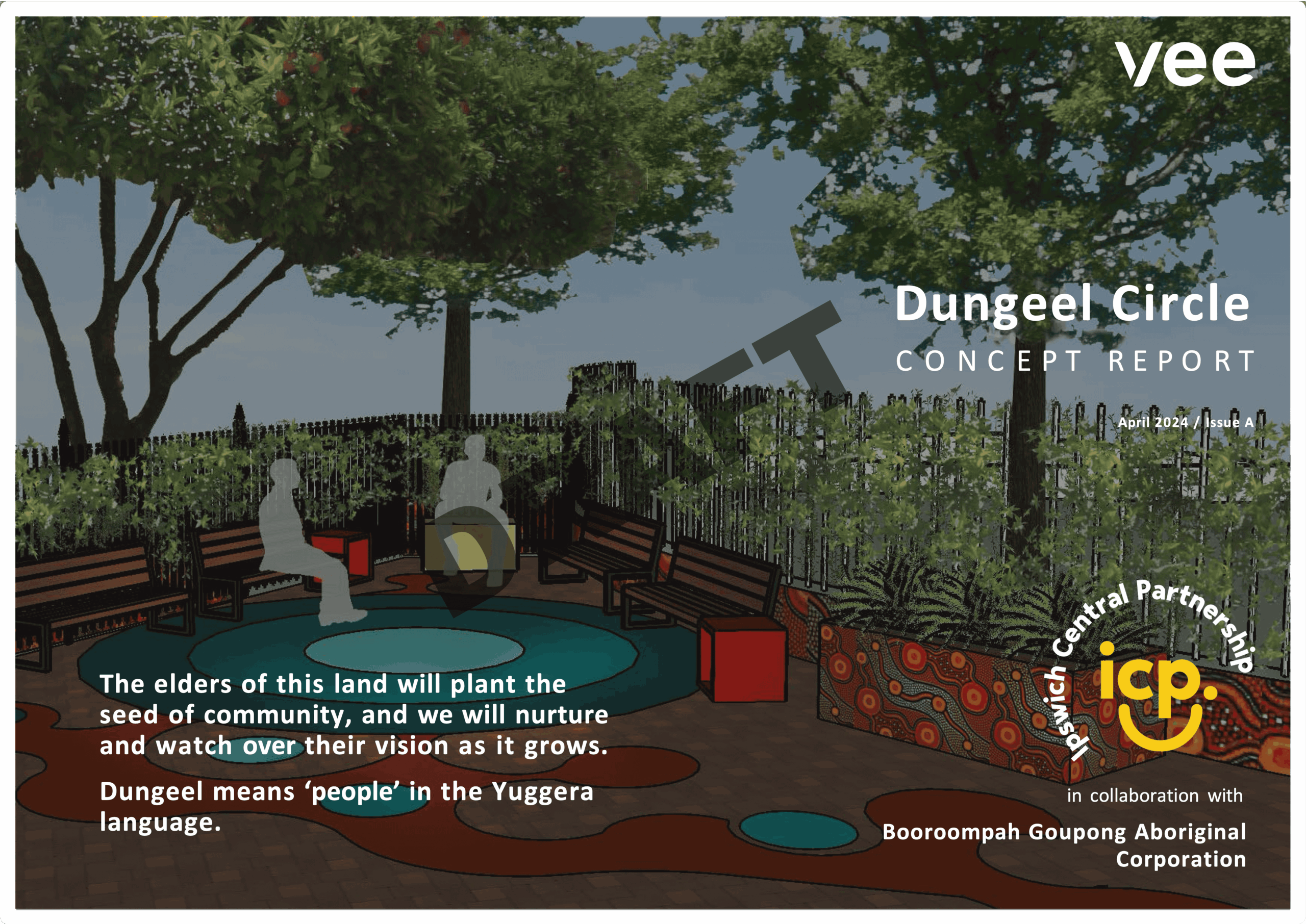
- The Dungeel Circle was an initiative of a local community group to which is being specifically designed to enhance men’s mental health and well-being, primarily for our first nations people.
- ACA provided backbone support for the project. The project was aligned to Ipswich City Councils strategic priorities.
- Vibrant and growing > Increased evens in the city centres.
- Increased environmental, sustainable, inclusive, and cultural initiatives.
- Safe, inclusive and creative > Enhanced cultural landscapes, landmarks and practices.
To see more click here.
Overview:
Beneficiaries: ‘Youth – aged 15 to under 25’, ‘Adults – aged 25 to under 65’, ‘People from a culturally and linguistically diverse background’, People in rural/regional/remote communities’, ‘Financially disadvantaged people’, ‘People at risk of homelessness/people experiencing homelessness’, ‘People with disabilities’, ‘Unemployed persons’.
Program Results: Climate Action Nurses
- Climate Actions Nurses made use of ACA’s community connection program that brought together Australian Primary Healthcrae Nurses Association and Startup Status to realise the impact portal.
- Aletha was a founding director and current supporter of Advancing Communities Australia. Through her professional roles, she provided ACA with a range of connections including Australian Medical Association round tables, centre for disease control working groups and is involved with a range of other national and local health related initiatives.
Overview:
Beneficiaries: ‘Youth – aged 15 to under 25’, ‘Adults – aged 25 to under 65’, ‘People from a culturally and linguistically diverse background’, People in rural/regional/remote communities’, ‘Financially disadvantaged people’, ‘People at risk of homelessness/people experiencing homelessness’, ‘People with disabilities’, ‘Unemployed persons’ and ‘General Community in Australia’.
Program Results: Volunteer Pathways
- ACA impacts are based on a diverse and vibrant volunteer community.
- One of the outcomes is that volunteers’ new employment pathways are created for volunteers as they learn new skills, or are able to demonstrate their skills to future employers through the volunteer work in a range of areas including publishing, web design, information systems development, project management and HR.
Overview:
Beneficiaries: ‘Youth – aged 15 to under 25’, ‘Adults – aged 25 to under 65’, ‘Families’, ‘People from a culturally and linguistically diverse background’, People in rural/regional/remote communities’, ‘Financially disadvantaged people’, ‘People with disabilities’, ‘Unemployed persons’ and ‘Environment’.
Program Results: Ipswich Energy Insecurity
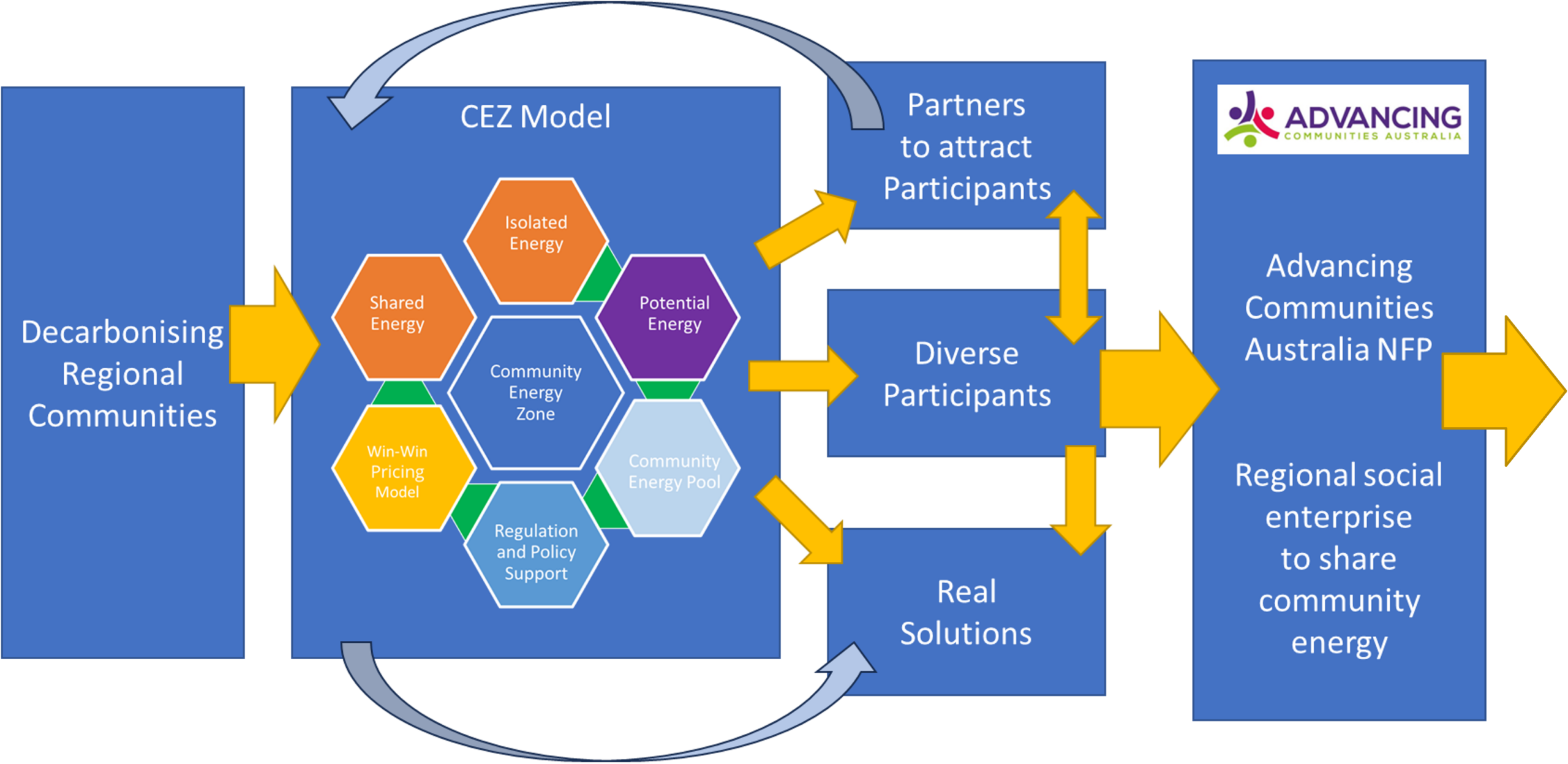
- We have worked with the Ipswich community on how sharing energy within communities through decarbonisation can address energy insecurity for the most vulnerable in the community, particularly those with non-communicable disease and disease risk.
- Presentation to Ipswich City Council Committee on the work was formally completed.
- In the early stages of ACA incorporation, it was involved in a government initiative called Cohort 3.
- ACA promoted and engaged many local businesses and governments using he model that created awareness on energy impact in the local region.
Program Results: Collaborative Energy Transition Model
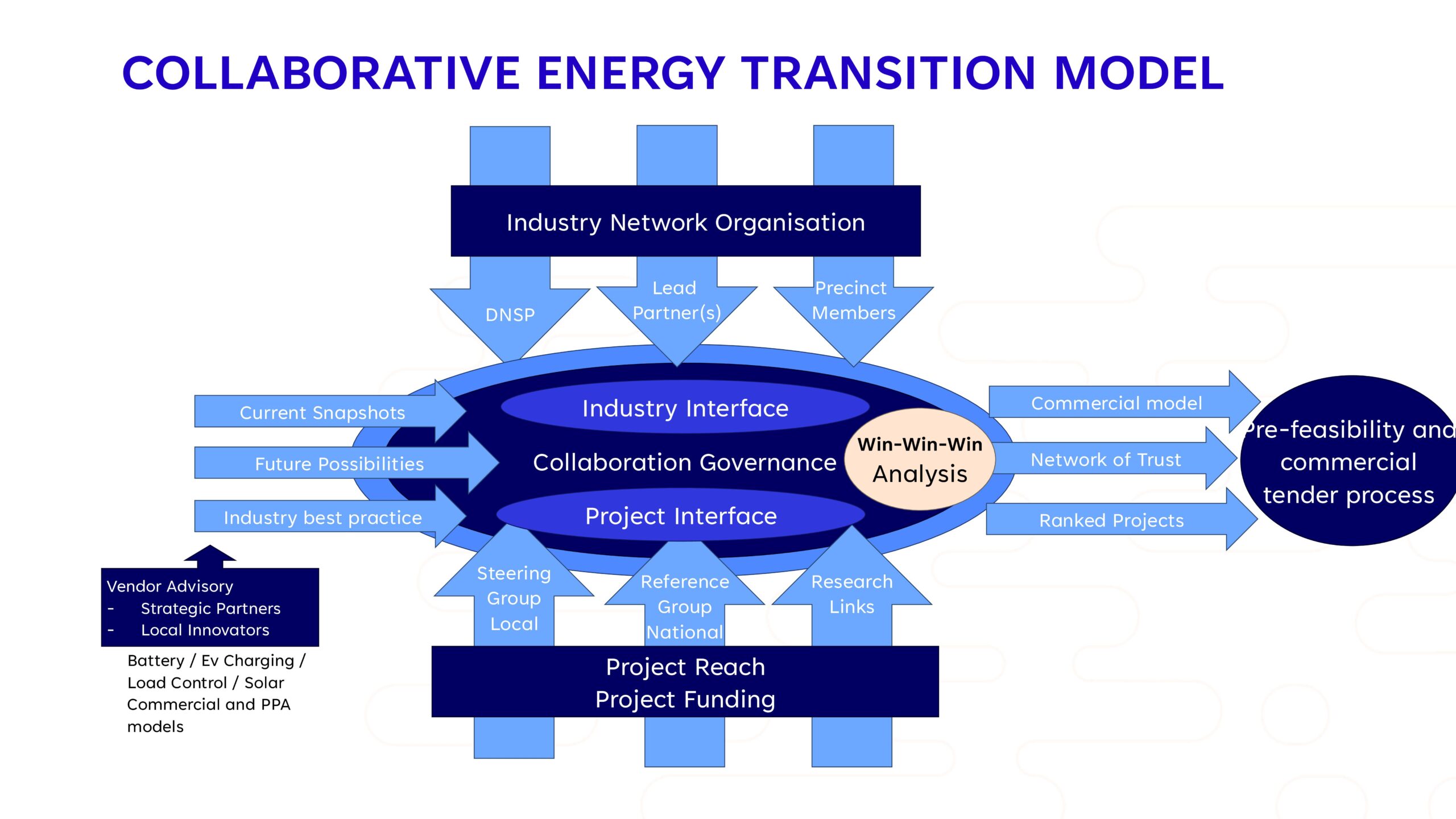
- The Collaborative Energy Transition Model was primarily developed by Advancing Communities Australia with strategic input from Climate-KIC Australia. The model addresses:
- Who to engage i.e. tenants, precinct owners, DNSPs, vendors, government, and intermediaries.
- When to engage i.e. sequenced touch points across project stages.
- Around what artefacts i.e. governance documents, technical modelling, and shared opportunity maps.
- The capabilities of the delivery team i.e what are the capabilities and skills needed to drive this process.
- The model has made impacts in energy transition awareness and readiness across multiple industries and precincts.
Program Results: Energy Transition Mackay
- Providing poject management and support for a major energy transition project both through paid contractors and volunteer resourcing.
- The project involved identifying precinct-wide energy transition opportunities with willing tenants, network constraints, and an anchor institution committed to testing the energy transition model.
- A significant final report is soon to be released.
- Reliable, Affordable Clean Energy for 2030 (RACE for 2030) is an innovative cooperative research centre for energy and carbon transition. We were funded with $68.5 million of Commonwealth funds and committments of $280 million of cash and in-kind contributions from our partners. Our aim is to deliver $3.8 billion of cumulative energy productivity benefits and 20 megatons of cumulative carbon emission savings by 2030. https://www.racefor2030.com.au/
- ACA through it’s partners was able to facilitate a research project to extend the impacts of the Energy Transition Mackay project.
- The research focused on what the collaborative process itself revealed, and what the field can learn from it as a replicable playbook for other precincts.
- A significant final report is soon to be released.